
A Moral and Practical Guide to AI for Black Business Owners

We are in deep consideration about how to move in harmony and integrity with the sweeping and controversial innovation that is Generative Artificial Intelligence (GenAI). People say AI is already here and we’ve been using it for years and, technically, they’re right. But there’s a big difference between General AI and Generative AI.
General AI analyzes existing data to classify, predict or follow rules (e.g., spell check, Netflix recommendations, or fraud detection like Captcha)
We are in deep consideration about how to move in harmony and integrity with the sweeping and controversial innovation that is Generative Artificial Intelligence (GenAI). People say AI is already here and we’ve been using it for years and, technically, they’re right. But there’s a big difference between General AI and Generative AI.
General AI analyzes existing data to classify, predict or follow rules (e.g., spell check, Netflix recommendations, or fraud detection like Captcha)

- Recommendation Engines: Netflix or Amazon suggesting products based on viewing history.
- Grammar Checkers: Tools like Grammarly identifying errors based on existing language rules.
- Predictive Analytics: Forecasting inventory levels, stock market trends, or potential machinery failures.
- Spam Filters: Classifying emails as spam or legitimate.
- Voice Assistants: Siri or Alexa interpreting voice commands to perform specific actions.
- Computer Vision/Facial Recognition: Identifying individuals in security footage or tagging photos on Facebook.
Examples of Generative AI
- Text Generation: ChatGPT, Jasper, or Gemini drafting articles, emails, or coding solutions.
- Image Generation: Midjourney, DALL-E, or Stable Diffusion creating images from text prompts.
- Audio/Music Generation: Tools creating unique music tracks or synthetic voices.
- Code Generation: GitHub Copilot automatically generating code snippets or translating programming languages.
- Data Augmentation/Synthetic Data: Creating artificial data for testing or training models when real data is scarce.
- Design & Art: Generating 3D models, UI layouts, or fashion designs from descriptive text.
It’s an understatement to say we’re conflicted about the tradeoffs being made for the convenience that GenAI promises.
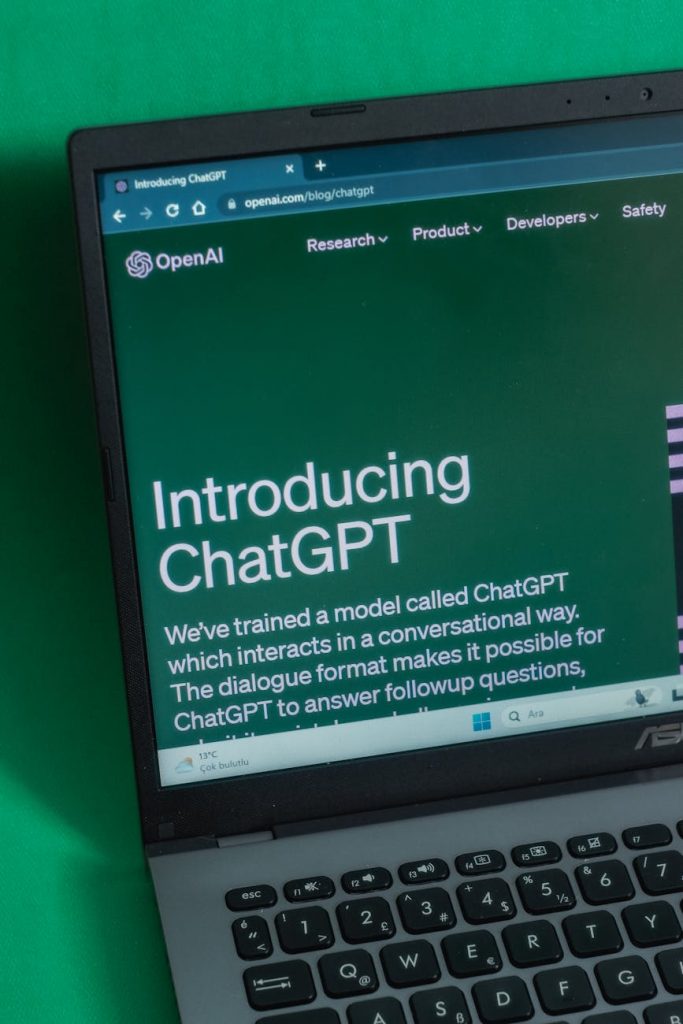

ChatGPT was publicly launched November 30, 2022 and in just 3.5 years it’s gone from relative obscurity to global dominance. There are currently more than 11,038 individual data centers around the world with new sites being brokered as you read this (check out Stargate, check out Open AI’s new lease in London) Each of the already exitstng data centers exceed 70 acres in land footprint, more than 552 tons of new carbon emissions and 5 million gallons of daily water consumption. And yes, you guessed it, those impacts are unevenly distributed. The negative environmental impact zones around data centers (the result of excessive electrical and water consumption and emission of pollutants) are concentrated in underresourced communities. For example, Google operates its data center in Finland on 97% carbon-free energy, yet its data centers in Asia use carbon-based energy 82-96% of the time (Harvard Business Review). The Brookings Institute published it’s 2025 report emphasizing the need to continue this trend of building data centers in low income areas/countries citing job creation as justification.
The way we are being prodded into the AI-era is kind of like that prank when someone runs up on you in a panic and you can’t see what they’re running from, but because they’re seriously running, you start running too. Only with AI, it’s no prank,
From the playlist to the pulpit, folks are finding and creating new applications for AI. We now have chart-topping GenAI ”artists” like Xania Monet and Slime dot, both of which pull from Black culture and talent and help to blur the line between human artistry and the artificially generated approximation there of. These days they’re even using GenAI to plan and lead worship services (Associate Press, Jun 2023). So, yes, we see the innovation, but at what cost, and where’s the authenticity? It’s like we avoid GMO in our food, but we’re being force fed a GMO life. Still, we’re willing to consider that (if) AI is here to stay, we still have agency, at least for now, in how to care for ourselves and each other as we navigate how/when/if we interact with it.
We’re rolling out this essay series as a pop-the-hood and take a deep dive into these and other AI-related thoughts, with a lens centered on small business sustainability, and Black-owned small business, in particular. Over the next few months we’ll report back from the rabbit holes of our investigation. And when it’s all said and done, maybe there’ll be more questions than answers. But one thing’s for certain, it’s time to start asking some direct questions, like:
What are we asking GenAI to do and why?
Can the actual full impact, environmental or otherwise, of GenAI be quantified?
Does the proliferation of GenAI improve or worsen opportunity for small business?
How do we preserve community life in an increasingly GenAI world?
As if all this weren’t enough, we’ve not even begun to talk about AGT. From what we’re finding, AGT is the next level beyond. Where GenAI creates new content (text, images, sound); Agentic AI (AGT) acts as an autonomous agent that plans, reasons, and executes multi-step workflows to achieve specific goals. GenAI creates. AGT acts, let that sink in.
Stay tuned.





Responses